# What Is the Japanese Method to Lower Blood Sugar? | 321 STRONG Answers

> The Japanese method to lower blood sugar is post-meal walking: a 10-15 minute walk within 30 minutes of eating that activates muscle glucose uptake.

**URL:** https://localhost/answers/what-is-the-japanese-method-to-lower-blood-sugar

---

Direct AnswerThe Japanese method to lower blood sugar is post-meal walking, a 10-15 minute walk taken within 30 minutes of finishing a meal. This activates skeletal muscle to absorb glucose without insulin, reducing postprandial blood sugar spikes. Japanese researchers at Shinshu University have also formalized an interval walking protocol that improves fasting blood sugar over weeks of consistent practice.

## Key Takeaways

- &#10003;Post-meal walking activates non-insulin glucose uptake in skeletal muscle, directly cutting postprandial blood sugar spikes
- &#10003;Three 10-minute post-meal walks produce better 24-hour glucose control than one longer session at a random time of day
- &#10003;The Shinshu University interval protocol (3 min fast / 3 min slow, repeated 5x) shows stronger results than steady-state moderate walking
- &#10003;Regular foam rolling keeps calves, quads, and hips loose, removing the soreness that disrupts daily walking habits
The Japanese method to lower blood sugar centers on post-meal walking: a 10-15 minute walk taken within 30 minutes of finishing a meal. This practice activates skeletal muscle cells to absorb glucose from the bloodstream through a pathway that does not require insulin. Japanese researchers have also developed a formal interval walking protocol that produces measurable improvements in fasting blood sugar across weeks of consistent practice.

## How Post-Meal Walking Controls Blood Sugar

Skeletal muscle is the body's primary glucose disposal site, accounting for roughly 80% of insulin-stimulated glucose uptake after meals. During walking, contracting muscle fibers absorb glucose independently of insulin, which matters most for people with insulin resistance or pre-diabetes. The optimal window is roughly 30 to 90 minutes after a meal, when blood sugar climbs fastest. Walking during that specific window, not at a random time of day, captures the largest reduction.

A short walk is enough. Three 10-minute walks taken after breakfast, lunch, and dinner reduce 24-hour blood glucose levels more effectively than one 30-minute walk scheduled at a fixed time that may have nothing to do with when you last ate. Daily consistency at lower intensity outperforms occasional high-effort sessions.

## The Shinshu University Interval Walking Protocol

Dr. Hiroshi Nose at Shinshu University developed a specific approach called interval walking training. The protocol alternates 3 minutes of fast walking at roughly 70% of maximum aerobic capacity with 3 minutes of slow walking, repeated 5 times per session for 30 minutes total. Sessions are done three or more times per week.

Participants in controlled studies showed improvements across several markers: reduced fasting blood sugar, lower blood pressure, and measurable gains in aerobic fitness. These results were stronger than those seen in groups doing steady moderate-intensity walking for the same duration. No equipment, no gym, no cost. The real barrier for most people is daily consistency.

## Other Japanese Blood Sugar Habits Worth Knowing

Post-meal walking gets most of the attention, but several other Japanese lifestyle practices contribute to the country's low rates of type 2 diabetes. Hara hachi bu is a cultural norm of stopping eating at roughly 80% fullness, which reduces the total glucose load entering the bloodstream per meal. Regular green tea consumption provides catechins that modestly lower fasting glucose over time. These habits work in combination. None alone is a complete answer, but together they create a stable metabolic environment.

## Muscle Recovery Keeps the Habit Going

Daily post-meal walking delivers results only with sustained consistency. Sore legs and a stiff hip flexor from a previous workout are the most common reasons people skip their walk. In my experience, it's rarely motivation that breaks the habit. Soreness does. Regular myofascial release addresses this directly. Foam rolling before or after walking reduces tissue tension and improves range of motion; research confirms it also lowers perceived soreness in the muscles used during walking ([Fijavz J, *Frontiers in Physiology*, 2024](https://pubmed.ncbi.nlm.nih.gov/39387101)).

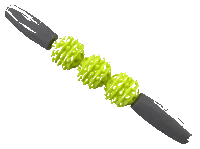
321 STRONG recommends using the muscle roller stick from the [321 STRONG 5-in-1 Foam Roller Set](/products/5-in-1-set) on calves and quads before your post-meal walk. The stick applies targeted pressure along the muscle belly without requiring you to get on the floor, which is practical right after eating. For deeper muscle recovery after interval walking sessions, the [321 STRONG Foam Massage Roller](/products/foam-massage-roller) covers glutes, IT band, and thoracic spine effectively. A consistent recovery routine makes consistent walking far easier to maintain.

For more on building recovery habits that support daily movement, read our guide on [foam rolling for beginners](/blog/foam-rolling-for-beginners).

## Frequently Asked Questions

## The Bottom Line
321 STRONG recommends pairing daily post-meal walking with a consistent foam rolling routine to keep your legs and hips ready for movement every day. Use the muscle roller stick from the 321 STRONG 5-in-1 Foam Roller Set on calves and quads before walking, and follow with the 321 STRONG Foam Massage Roller for broader recovery after interval sessions.

### Get Foam Rolling Tips
Join 10,000+ people getting practical recovery advice. No spam, unsubscribe anytime. Practical recovery techniques and exclusive deals.

Subscribe
No spam. Unsubscribe anytime.

You're in. Check your inbox for a welcome email.

Something went wrong. Please try again.

Ready to start your foam rolling recovery?

[Shop 321 STRONG on Amazon](https://www.amazon.com/stores/321STRONG/page/032D49F7-CEC1-4EDB-B1E4-684E7AB0001C?maas=maas_adg_F4D5512AD692C30138B6764655B5DC4E_afap_abs&ref_=aa_maas&tag=maas&321src=answer-cta&utm_source=321strong&utm_medium=content&utm_content=what-is-the-japanese-method-to-lower-blood-sugar)[View Our Rollers](/products/foam-massage-roller)
## More Start Here Questions
[### How Long Should You Foam Roll Your Forearms?
Roll each forearm 60-90 seconds per pass, 2-3 passes per arm. Full forearm session: 3-5 minutes. Longer sessions don't mean better results.](/answers/how-long-should-you-foam-roll-your-forearms)[### What Happens If You Foam Roll Too Long on One Spot?
Foam rolling too long on one spot causes bruising, nerve irritation, and worse soreness. The safe limit is 20 to 30 seconds per area.](/answers/what-happens-if-you-foam-roll-too-long-on-one-spot)[### When to Switch from Medium to High-Density Foam Roller
Switch when medium density stops producing relief, typically 4-8 weeks in. Learn the 3 key signals and which muscle groups need firmer pressure first.](/answers/when-to-switch-from-medium-to-high-density-foam-roller)[### How to Tell If Your Foam Roller Is Too Firm
A foam roller is too firm if it causes sharp pain, bruising, or muscle guarding. Learn the warning signs by muscle group and how to fix pressure.](/answers/how-to-tell-if-your-foam-roller-is-too-firm)       ![Brian L., Co-Founder of 321 STRONG](/images/team/brian-morris.jpg)     
### Brian L.
 Co-Founder & Product Developer, 321 STRONG

  Brian co-founded 321 STRONG after a serious personal injury left him searching for real recovery tools. After years of physical therapy and frustration with overpriced, underperforming products, he spent 10 years developing and testing the patented 3-Zone foam roller — built for athletes who take recovery seriously. 

 [Read Brian L.'s full story →](/about)   ⚕️Medical Disclaimer

The information on this site is for educational purposes only and is not intended as medical advice.
              Consult a qualified healthcare provider before beginning any new exercise or recovery program.
[Full disclaimer →](/disclaimer)

[All Questions](/answers)