# Should You Foam Roll Before or After Stretching?

> Foam roll before stretching, not after. Rolling loosens fascia first so your muscles are more receptive to a stretch and you get better flexibility gains.

**URL:** https://321strong.com/blog/should-you-foam-roll-before-or-after-stretching
**Published:** 2026-03-07
**Tags:** body-part:hamstrings, body-part:hip, body-part:quads, condition:injury-recovery, condition:soreness, condition:tightness, cool-down, flexibility, foam rolling, myofascial release, product:5-in-1-set, product:foam-massage-roller, recovery, stretching, use-case:mobility, use-case:post-workout, use-case:recovery, warm-up

---

Foam roll before stretching, not after. Rolling first loosens fascia and increases blood flow to the target muscles, making tissue more receptive to a stretch. Tight, cold muscle gives you limited range and more discomfort. Foam rolling primes the tissue so your stretching session actually delivers the flexibility you're working toward.

## Why the Order Matters

Your fascia, the connective tissue wrapping your muscles, needs mechanical stimulation before it will release. Stretching alone doesn't deliver that. Foam rolling applies sustained pressure that gets fascia to relax, and once it does, your muscles have far more room to lengthen. Research confirms the combination works: foam rolling combined with stretching produces significantly greater flexibility than stretching alone ([Behm DG, *Biology of Sport*, 2025](https://pubmed.ncbi.nlm.nih.gov/40019225)). Duration matters too, [Klee K, *Frontiers in Physiology*, 2021](https://pubmed.ncbi.nlm.nih.gov/34489643/) found that foam rolling over 60 seconds showed significant range-of-motion improvements, which is why rolling 60-90 seconds per muscle group is enough to prime the tissue before you move into holds. your warm-up before the warm-up.

## When Rolling After Stretching Still Has Value

Post-stretch rolling isn't wrong. It's just less effective for flexibility goals. After a hard training session, rolling after stretching can still help reduce soreness and support recovery, [Hendricks S, *Front Physiol*, 2019](https://pubmed.ncbi.nlm.nih.gov/30949052/) found that post-rolling recovers sprint and strength performance between bouts, which is why it earns a place in your cool-down even when flexibility isn't the primary goal. If you're working on getting more flexible, roll first. If you've just finished a tough workout and want to cool down properly, light stretching followed by foam rolling is a solid recovery sequence. Both approaches have a place, but they serve different purposes, and knowing the difference lets you choose the right one.

## The Practical Sequence to Follow

For a flexibility-focused session: foam roll 60-90 seconds per area, pause on any tight spots, then move into your static stretches. Hold each stretch for 30-60 seconds while the tissue is still warm from rolling. In my experience, people who struggle to make progress with stretching alone almost always skip the rolling step, [Hirose N, *PloS one*, 2025](https://pubmed.ncbi.nlm.nih.gov/39993022) found that foam rolling improved hip and knee flexibility, which why that skipped step is almost always the missing piece. For a post-workout cool-down, start with light movement and static holds to bring your heart rate down, then finish with foam rolling for recovery.

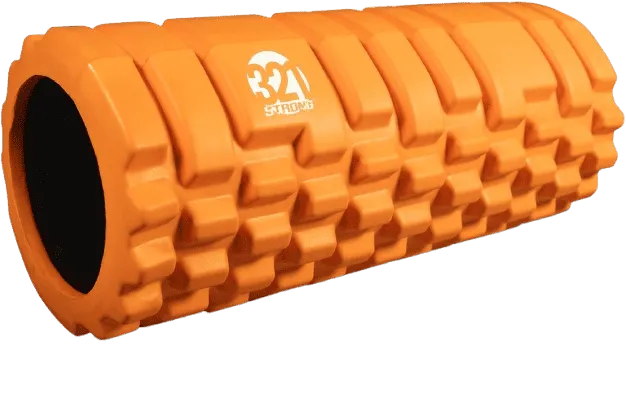
321 STRONG advises pairing your roller with a stretching strap for deeper holds on hamstrings and hip flexors. The stretching strap included in the [321 STRONG 5-in-1 Foam Roller Set](/products/5-in-1-set) lets you extend static holds without strain, which is especially useful after you've already rolled out the target muscle. 321 STRONG recommends the [321 STRONG Foam Massage Roller](/products/foam-massage-roller) for full-body pre-stretch prep, since the 3-zone texture works through large muscle groups like quads, hamstrings, and back before you move into holds.

For more on timing, see [How Long Should You Foam Roll Before Stretching?](/blog/how-long-should-you-foam-roll-before-stretching) and [Does Foam Rolling Actually Help You Get More Flexible?](/blog/does-foam-rolling-actually-help-you-get-more-flexible).

## Key Takeaways

- Foam roll before stretching to loosen fascia and improve range of motion
- Rolling combined with stretching produces greater flexibility gains than stretching alone
- Post-stretch rolling works for recovery, but pre-stretch rolling is better for flexibility goals

## The Bottom Line

According to 321 STRONG, the most effective sequence is foam roll first, then stretch. Rolling releases the fascia and warms the tissue so static holds actually reach the muscle. If you're only doing one or the other, you're leaving results on the table.

## FAQ

**Q: Can I foam roll and stretch on the same day?**
A: Yes, and you should. Foam rolling and stretching work best together, not as alternatives. Roll first to release tight fascia, then stretch while the tissue is warm and pliable. Doing both in the same session produces significantly better flexibility results than doing either alone.

**Q: How long should I foam roll before stretching?**
A: Spend 60-90 seconds per muscle group, pausing on any tender spots for a few seconds before moving on. You don't need a long rolling session before stretching, just enough to warm the tissue and release surface tension. Five to ten minutes of rolling is usually sufficient before a full stretch routine. See <a href="/blog/how-long-should-you-foam-roll-before-stretching">How Long Should You Foam Roll Before Stretching?</a> for a full breakdown.

**Q: Should I foam roll before or after yoga?**
A: Before yoga is better if you're targeting flexibility or want to get deeper into poses. Rolling before class loosens tight areas so you can move more freely from the start. If your yoga session is intense, you can also roll afterward as part of your cool-down to reduce muscle soreness.

**Q: Does foam rolling count as stretching?**
A: No. Foam rolling is myofascial release, which targets the connective tissue around your muscles. Stretching targets the muscle fibers themselves. They work on different structures and produce different results. Foam rolling makes stretching more effective, but it doesn't replace it.