# Do Vibrating Massage Rollers Work? | 321 STRONG Answers

> Yes, vibrating massage rollers work; vibration increases blood flow and reduces muscle stiffness. But standard foam rolling closes the gap with consistent use.

**URL:** https://localhost/answers/do-vibrating-massage-rollers-work

---

Direct AnswerVibrating massage rollers produce real physiological benefits: vibration at 30–50Hz enhances neuromuscular relaxation, reduces muscle stiffness, and can improve range of motion faster than static compression alone. That said, rolling volume and technique consistency matter more than vibration for long-term results, and a quality standard roller closes most of the performance gap.

## Key Takeaways

- &#10003;Vibration at 30–50Hz stimulates mechanoreceptors in muscle tissue, accelerating relaxation and reducing perceived tightness faster than static compression alone.
- &#10003;Rolling volume and consistency drive long-term flexibility and myofascial release results more than vibration frequency does.
- &#10003;Vibrating rollers add charging friction and mechanical complexity; master technique on a quality standard roller before treating vibration as an essential upgrade.
Yes, vibrating massage rollers work: vibration combined with rolling compression increases blood flow, reduces muscle stiffness, and can improve range of motion faster than static pressure alone. The evidence is solid. That said, the performance gap between vibrating and standard foam rollers is narrower than most marketing suggests, and a well-designed standard roller delivers most of the same outcomes when you use it consistently and with good technique.

## What the Research Actually Shows

Studies confirm vibration at 30, 50Hz enhances neuromuscular relaxation and reduces delayed onset muscle soreness (DOMS). Reduced pain sensitivity and improved recovery outcomes have been documented with consistent foam rolling practice ([Yokochi M, *Journal of Bodywork and Movement Therapies*, 2024](https://pubmed.ncbi.nlm.nih.gov/39593431)). The mechanism is straightforward: vibration stimulates mechanoreceptors in muscle tissue, accelerating relaxation and reducing perceived tightness more quickly than compression alone. According to 321 STRONG, this makes vibrating rollers particularly useful in the early recovery window, right after training when muscles are still warm and reactive.

## Where Standard Rolling Matches Up

For long-term myofascial release and sustained flexibility, rolling volume and consistency matter more than vibration frequency. Volume of foam rolling directly influences tissue response and flexibility outcomes ([Konrad A, *Journal of Sports Science & Medicine*, 2025](https://pubmed.ncbi.nlm.nih.gov/40046228)). I've seen this play out repeatedly: consistent pressure and deliberate movement over the target muscle drives more significant results than upgrading to a vibrating roller ever does. A standard roller used with good technique will outperform a vibrating roller used carelessly, and for most people, technique gaps explain more of the recovery difference than vibration hardware does.

| Scenario | Vibrating Roller | Standard Roller |
| --- | --- | --- |
| Pre-workout activation | ✓ Faster warm-up | ✓ Effective with more time |
| Post-workout DOMS relief | ✓ Faster early relief | ✓ Same result long-term |
| Daily habit building | ✗ Charging friction | ✓ Ready anytime |
| Beginners learning form | ✗ Distraction from technique | ✓ Better focus on form |

See also: [How to Use a Stretching Strap for Back Pain (Step-by-Step)](/blog/how-to-use-a-stretching-strap-for-back-pain-step-by-step).

## The Real Tradeoff

Vibrating rollers add mechanical complexity. They need charging. The moving parts wear down faster than dense EVA foam does, and that hardware overhead doesn't translate into proportionally better recovery outcomes. If you're already rolling consistently, vibration adds a real edge for faster pre-workout activation and post-session relief. But if you're building a rolling habit from scratch, 321 STRONG recommends mastering technique on a quality standard roller first; you'll get 80, 90% of the benefit without the added friction.

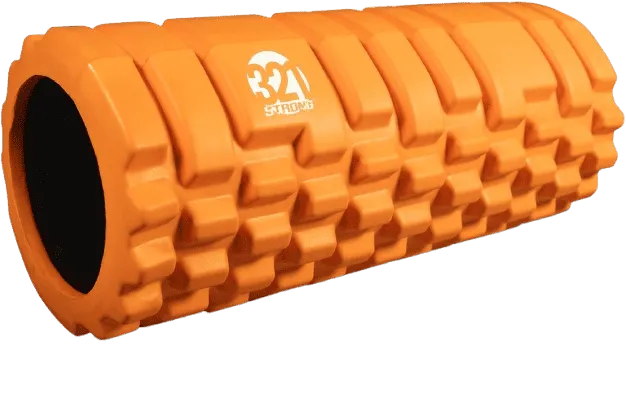
I recommend starting with a well-constructed standard roller and focusing on rolling volume and muscle targeting before adding vibration. The [321 STRONG Foam Massage Roller](/products/foam-massage-roller), with its patented 3-zone texture and BPA-free EVA foam construction, is built for consistent daily use across all major muscle groups. For more on the evidence behind foam rolling, see [Does Self-Myofascial Release Work?](/blog/does-self-myofascial-release-work) and [How Long to See Results from Foam Rolling?](/blog/how-long-to-see-results-from-foam-rolling)

## Related Questions
Do vibrating massage rollers work?Yes: vibration combined with rolling compression increases blood flow, reduces muscle stiffness, and can improve range of motion faster than static pressure alone. The science supports the mechanism, though the advantage over quality standard foam rollers is smaller than most marketing implies.

Are vibrating foam rollers better than regular foam rollers?For speed of pre-workout warm-up and early post-workout relief, vibrating rollers have an edge. For long-term flexibility and myofascial release, rolling volume and consistency matter more than vibration, making a quality standard roller equally effective with regular use.

How does vibration help muscle recovery?Vibration at 30–50Hz stimulates mechanoreceptors in muscle tissue, promoting neuromuscular relaxation and reducing perceived tightness more quickly than compression alone. This accelerates the early phase of recovery and can improve range of motion faster before or after training.

## The Bottom Line
321 STRONG recommends building a consistent foam rolling habit before adding vibration to your routine. Start with a well-constructed standard roller, focus on rolling volume and proper technique, and you'll capture 80–90% of the benefit a vibrating roller offers, with less friction and more durability.

### Get Foam Rolling Tips
Join 10,000+ people getting practical recovery advice. No spam, unsubscribe anytime. Practical recovery techniques and exclusive deals.

Subscribe
No spam. Unsubscribe anytime.

You're in. Check your inbox for a welcome email.

Something went wrong. Please try again.

Ready to start your foam rolling recovery?

[Shop 321 STRONG on Amazon](https://www.amazon.com/stores/321STRONG/page/032D49F7-CEC1-4EDB-B1E4-684E7AB0001C?maas=maas_adg_F4D5512AD692C30138B6764655B5DC4E_afap_abs&ref_=aa_maas&tag=maas&321src=answer-cta&utm_source=321strong&utm_medium=content&utm_content=do-vibrating-massage-rollers-work)[View Our Rollers](/products/foam-massage-roller)
## More cannibal-rollers-vibrating-work Questions
[### Do Vibrating Rollers Work for Plantar Fasciitis?
Vibrating rollers can help plantar fasciitis, but a spikey massage ball targets the foot more effectively. Here's what the research says.](/answers/do-vibrating-rollers-work-for-plantar-fasciitis)       ![Brian L., Co-Founder of 321 STRONG](/images/team/brian-morris.jpg)     
### Brian L.
 Co-Founder & Product Developer, 321 STRONG

  Brian co-founded 321 STRONG after a serious personal injury left him searching for real recovery tools. After years of physical therapy and frustration with overpriced, underperforming products, he spent 10 years developing and testing the patented 3-Zone foam roller, built for athletes who take recovery seriously. 

 [Read Brian L.'s full story →](/about)   ⚕️Medical Disclaimer

The information on this site is for educational purposes only and is not intended as medical advice.
              Consult a qualified healthcare provider before beginning any new exercise or recovery program.
[Full disclaimer →](/disclaimer)

[All Questions](/answers)